
K1
Limited evidenceRead the findings →Booster's smallest walking humanoid, a robot to program rather than a home helper. It suits robotics classes, labs and football competition teams. The cheapest version only walks for about half an hour per charge.
Updated
See the alternatives below, or switch market.
Where it sits in Booster Robotics’s range
- K1This model
- Booster T2Booster's newest humanoid, listed as new on its site
- T1Larger 1.2m developer humanoid, a RoboCup AdultSize winner
Feedback
What we know
Humanoids Daily covered its launch and RoboCup record, and Booster Robotics publishes the specs for its three versions. The best real-world evidence comes from competition: Humanoids Daily reports that both finalists in the 2025 RoboCup KidSize league used K1, so it's at least survived tough, heavily programmed use. It does very little until someone writes code for it, and the version you pick decides how long it walks. That's too little independent testing for an overall review label.
Proven on the football pitch
Humanoids Daily reports that Germany's Boosted HTWK team won the 2025 RoboCup KidSize league with K1, and the runners-up used the same robot. Booster Robotics highlights the same title. Competition robots get knocked over, rebooted and pushed hard, and the teams write their own code for them, so that counts for something. It isn't a household test, though. It shows K1 suits people who program robots, not people who want a robot to do things for them.
Pick the version carefully
Booster Robotics sells three versions with the same body. The Geek has a 2Ah battery good for about 30 minutes of walking at 0.4m/s, a 48 TOPS computer and a three-month warranty. The Education has a 5Ah battery, about 80 minutes of walking, 117 TOPS and a one-year warranty, and the Professional raises the computer to 200 TOPS. At launch, Humanoids Daily quoted about 40 minutes of active use, so busy sessions may fall short of the walking figures.
Made for code, not chores
Booster Robotics calls K1 an introductory development platform, with a depth camera, a motion sensor, three microphones, a speaker and support for writing your own software. Humanoids Daily adds that it works with ROS 2, a common robot software toolkit, and NVIDIA's Isaac Sim simulator, and that Booster aims it at education, research and exhibitions. Neither mentions carrying things or helping around the house. Out of the box, it's a platform rather than a finished product.
Support, warranty and what's unchecked
Each K1 comes with Doubao, an AI language service, free for six months, and Booster Robotics doesn't say what happens after that. Warranty is three months on the Geek version and a year on the others. Outside Booster, nobody has tested battery life, reliability or support, and we found no independent account of repairs, spare parts or how Booster handles faults outside China. Before buying one for a class or a team, ask the seller who fixes it, where, and how quickly.
Specs come from Booster's K1 page and cover the Geek, Education and Professional versions, which share the same body.
Our take
Should you buy the K1?
Best for: Robotics classes and teams building robots for competitions. Skip it if: You need the basic version to walk for more than half an hour.
Buy one for a robotics class, a lab or a RoboCup-style team, and avoid the Geek version unless half-hour sessions will do. Unitree's R1 is the obvious rival from a maker that sells internationally, and HighTorque's Mini Pi+ is a smaller research humanoid you'd buy direct from China with little local support.
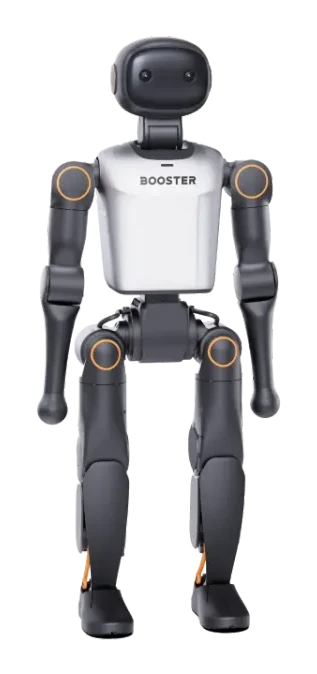
K1 is Booster Robotics' smallest humanoid, a walking robot just under a metre tall with twenty-two motorised joints, sitting below the company's larger T1. It has a depth camera, microphones and a speaker, and Booster pitches it as a starting platform for learning to build robot behaviour. Both finalists in the 2025 RoboCup KidSize football league used it.
What is known comes from Booster's specifications and early coverage such as Humanoids Daily. Booster says the Geek version walks for about half an hour on a charge and comes with a three-month warranty, while the Education and Professional versions walk for about 80 minutes, get faster computers and carry a one-year warranty. Whichever version you buy, it does very little until someone writes code for it, and it isn't sold in the UK.
Before you buy
The questions people ask about this one
What can it do on its own today?
It walks, balances and responds through its microphones and speaker, but most useful behaviour has to be programmed. Booster Robotics sells it as a development platform with a stereo depth camera and open development support, and Humanoids Daily calls it an entry-level platform for education and research. Expect to write or install software before it does much.
What does it need to run?
A charged battery and a computer to develop on. Booster claims about 30 minutes of walking at 0.4m/s on the Geek version and about 80 minutes on the Education and Professional versions, per the specifications. It connects over Wi-Fi, Bluetooth 5.2 and wired Ethernet, and takes firmware upgrades.
Is there a subscription?
Not for the robot itself, as far as Booster says. Each K1 includes the Doubao AI language service free for six months, per the specifications, and Booster doesn't spell out what happens next. If spoken conversation matters to you, ask the seller whether it keeps working once the six months are up, and what it costs.
Who supports it if it breaks?
Booster, within the warranty: three months for the Geek version and one year for Education and Professional, per the specifications. We found no independent reports on repairs or spare parts. If you buy through a local robotics dealer, ask whether they repair it themselves or send it back to Booster.
Alternatives
Other humanoid robots to compare.
R1
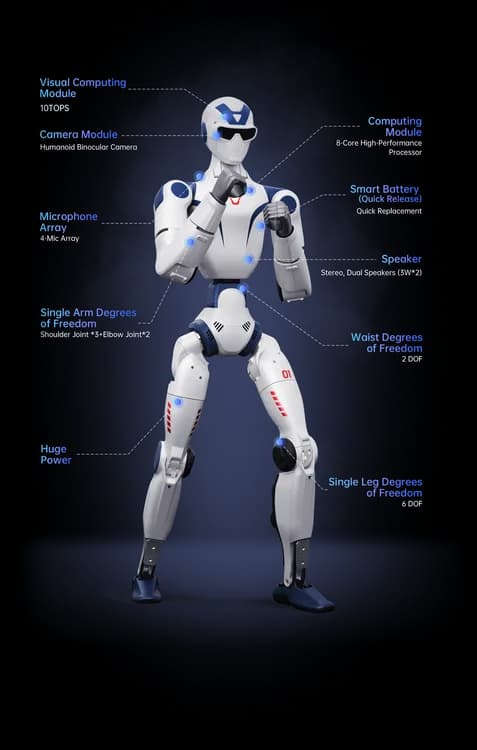
Why consider it: A compact humanoid that's also a way into robot movement and development.
The compromise: It's a robotics project rather than a home helper, and the configuration you pick matters a lot.
Mini Pi
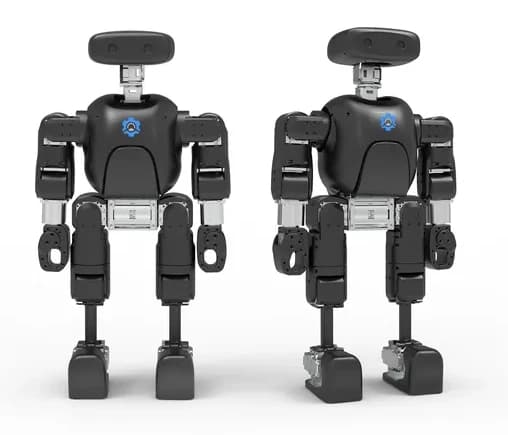
Why consider it: A smaller research humanoid that walks, jumps and runs your own code.
The compromise: It's bought direct from China with no local support we could find, and nobody independent has reviewed it.
Specs
Full specifications
Each specification names its source. Manufacturer claims are not independent test results; unconfirmed figures are labelled.
Owner reviews
Do you own the K1?
Tell people how it’s held up: cleaning, maintenance, faults and support. Owner accounts are shown separately from independent reviews.
Sources
Where this page’s findings come from
Sources
Videos
- Charbax: Booster Robotics humanoid dev kit: T1/K1 RL balance, Jetson Orin, ROS2 ↗
- Peter Kappes: Booster Robotics humanoid robot K1 at CES 2026 ↗
- Search YouTube for Booster Robotics K1 ↗Search results may include company demonstrations or similar models. Check the source and model name; a demonstration is not an independent performance test.