
Apollo 2
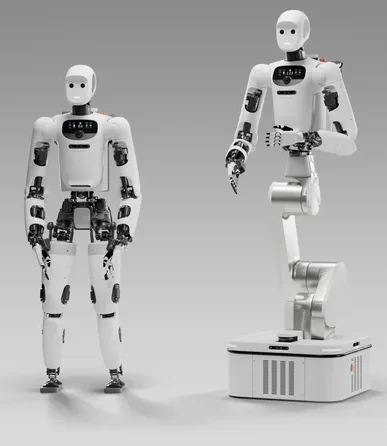
Limited evidenceRead the findings →Apptronik's second industrial humanoid, with legs or on wheels. For now it mainly gathers training data, so it suits businesses after a development platform. It isn't sold to the public, and Apollo 3 will be the version for sale.
Updated
See the alternatives below, or switch market.
Where it sits in Apptronik’s range
- Apptronik ApolloFirst-generation Apollo humanoid
- Apollo 2This model
- Apptronik Apollo 3Planned commercial version, built on Apollo 2's data
Feedback
What we know
The Robot Report covered the launch from Apptronik's announcement, and Apptronik describes the design and software. Both are clear that it's a data-collection and development platform, and that Apollo 3 is the one meant for wider sale. It comes with walking legs or a wheeled base, practises real tasks at Apptronik's Robot Park in Austin, and its data trains Google DeepMind's Gemini Robotics models. Apptronik publishes almost no specifications, not even height or payload.
Legs or wheels, depending on the job
Apptronik offers Apollo 2 with walking legs, for spaces built around people, or on a wheeled base for stability in high-throughput sites. The Robot Report says the wheeled version is aimed at industrial settings and the legged one at places closer to human spaces. So the choice comes down to your floor and the loads involved, not whether legs look more impressive. Neither source gives speed, height or lifting figures for either version.
Its real job is gathering data
Apollo 2 learns through remote operation and autonomous work at Apptronik's Robot Park, according to The Robot Report, and that data trains Google DeepMind's Gemini Robotics models. Apptronik says what Apollo 2 learns feeds straight into its commercial product, Apollo 3. Mercedes-Benz and GXO are named as partners. For a business, that makes Apollo 2 closer to a development platform than a finished robot you'd put straight to work.
Software and uptime claims
Apptronik describes Artemis, its software for perception, planning, safety and task execution, and Fleet Connect for monitoring and directing robots. Swappable batteries, opportunity charging and tethering are meant to allow near round-the-clock work, and a safety zone is designed to pause movement when an object is detected. These are design claims. Nobody independent has tested it, and no customer has published how reliable, fast or safe it is in real work, or measured uptime, interventions or throughput.
Apptronik publishes no measured specifications for Apollo 2, so the specs below are the features it describes.
Our take
Should you buy the Apollo 2?
Best for: Industrial partners helping collect data to train robot software. Skip it if: You need a finished robot you can buy and use now.
a sign of where industrial humanoids are heading rather than something to buy, and businesses that talk to Apptronik should expect a data-gathering partnership. Businesses comparing working humanoids can look at Agility's Digit, and anyone after a robot to own should look at developer humanoids such as Unitree's G1.
Apollo 2 is Apptronik's second industrial humanoid, unveiled in July 2026 alongside Robot Park, an Austin site where the robots practise real tasks. It comes with walking legs or a wheeled base, has dexterous hands and swappable batteries for near round-the-clock work, and runs Apptronik's own software for planning tasks and managing fleets.
The Robot Report covered its launch from Apptronik's announcement, and says its job is gathering data to train Google DeepMind's Gemini Robotics models and to shape Apollo 3, which will be the product Apptronik sells. Apptronik publishes almost no specifications, not even height or payload, and its page offers only a sales conversation. Figures from the original Apollo don't necessarily apply to this one.
Before you buy
The questions people ask about this one
Can I actually buy one?
No. The only route is a sales conversation for businesses through Apptronik, and The Robot Report describes Apollo 2 as a data-collection platform ahead of Apollo 3, the commercial product. There's no home version and no public price.
Is it safe to have around people?
Apptronik says Apollo 2 has hardware-level safety zones and pauses movement when it detects an object in its impact zone, per the specifications. That's the maker's claim, and nobody independent has tested it. It's designed for managed workplaces, not homes.
What does it need to run?
Batteries, charging kit and Apptronik's software. The maker lists swappable batteries, opportunity charging and tethering, run by its Artemis control software and Fleet Connect management, per the specifications. The Robot Report adds that Apollo 2 is trained on real tasks at Apptronik's Robot Park in Austin.
Who supports it if it breaks?
Apptronik, through a direct business relationship. Apptronik handles every enquiry itself and publishes no service terms. With partners such as Mercedes-Benz and GXO named by The Robot Report, support comes as part of a commercial deal rather than a consumer warranty.
Alternatives
Other humanoid robots to compare.
Digit
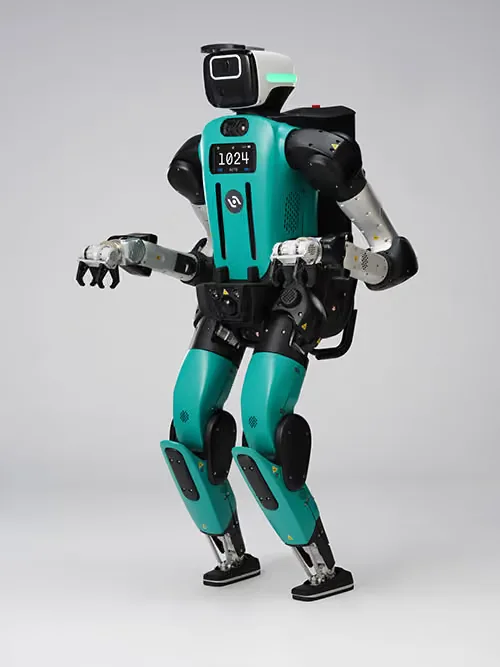
Why consider it: A warehouse humanoid with a real deployment record and Arc fleet software.
The compromise: The new Digit 5 is still in development, so the earlier deployments don't prove every new feature.
Phoenix Gen 8
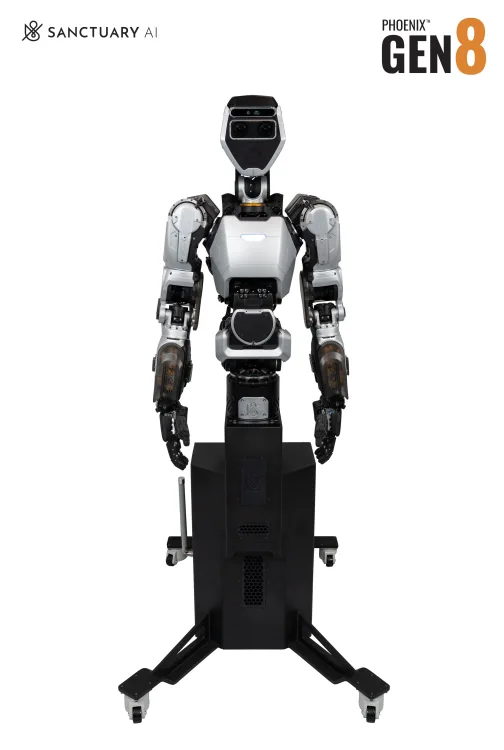
Why consider it: Another work robot on a wheeled base, built around dexterous hands and training data.
The compromise: Like Apollo 2, it's about handling objects and gathering data, not walking domestic help.
Specs
Full specifications
Each specification names its source. Manufacturer claims are not independent test results; unconfirmed figures are labelled.
Owner reviews
Do you own the Apollo 2?
Tell people how it’s held up: cleaning, maintenance, faults and support. Owner accounts are shown separately from independent reviews.
Sources
Where this page’s findings come from
Sources
Videos
- AI Futivus: Inside Apollo 2: How Apptronik and Google DeepMind Train Humanoid Robots ↗
- Framewave Media | Austin Video Production Company: Apptronik Apollo 2 Launch Video | Humanoid Robotics Product Launch ↗
- Search YouTube for Apptronik Apollo 2 ↗Search results may include company demonstrations or similar models. Check the source and model name; a demonstration is not an independent performance test.