
Sirius
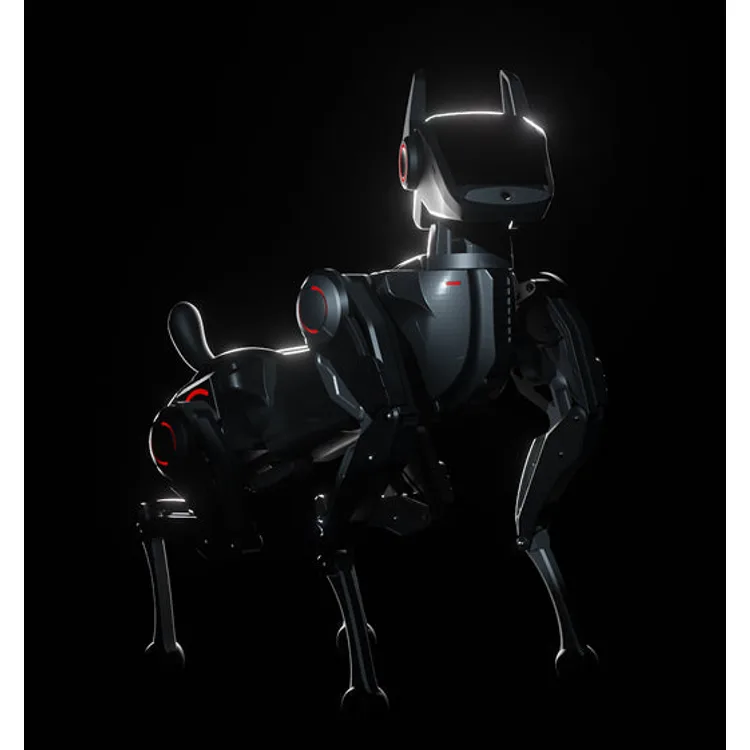
A small, fast-moving robot dog you can train, customise and program. It walks, dances and answers voice commands, but the only people to try it before launch saw it fall over a lot.
See the alternatives below, or switch market.
The short version
Sirius is a 25cm-tall robot dog from Hengbot, a start-up that raised its money on Kickstarter in 2025. It weighs under a kilo, has 14 motors in its legs and head, a small screen for a face and a camera that can learn who you are. It takes spoken commands through large AI language models in the cloud, and you can design new moves and personalities in Hengbot's editor. The EDU version adds full developer access in C, C++ and Python.
The trade-off is polish. It's built for flat indoor floors, runs for under an hour while walking and has no self-charging dock. Voice control needs Wi-Fi. Hengbot planned the first deliveries to Kickstarter backers for late 2025, but its own store only offers a waitlist, so you can't simply buy one yet.
Nobody has published a finished review of a shipping Sirius. The hands-on reports so far are from a demo unit and a maker demo before launch.
Our take: Wait. If you like the idea of a robot dog you can program, Petoi's Bittle X is on sale, costs far less and has finished reviews. If you want a robot pet that looks after itself, Sony's aibo is built for that. Come back to Sirius once a reviewer has lived with a shipping unit and its falls and connection problems are either fixed or confirmed.
Where it sits in Hengbot’s range
- SiriusThis model
- Sirius ProKickstarter bundle with spare battery and Bluetooth controller
- Sirius EDUAdds developer tools with C, C++ and Python access
What we know so far
Limited evidence No independent, finished hands-on review of this robot yet. What follows comes from the maker's specifications and early coverage, and says where something is untested.
There's no finished review yet, so treat everything here as early impressions. Gizmodo had a demo unit without the shipping software and TechRadar saw Sirius at a maker demo shortly before the first backer units shipped. Both found its movement lifelike when it stayed upright, and both saw it fall over a lot. Gizmodo couldn't get its unit onto Wi-Fi, so it never tried voice control itself. TechRadar called it an expressive experiment for developers rather than a family pet.
Gizmodo, hands-on, Jul 2025 (Demo unit, tested before launch; Tested a demo unit before launch, without the shipping software, and couldn't get it online) · TechRadar, hands-on, Dec 2025 (Seen at a maker demo before launch; A short hands-on at a maker demo, not a finished review)
It falls over, often
Both early testers noticed this first. Gizmodo spent much of its time picking Sirius up, because it tripped when steered with the controller and couldn't get back on its feet. TechRadar saw a shockingly high number of falls during the demo and blamed springy lower legs that have no motors of their own. Both used pre-launch units, so shipping software may behave differently, but nobody has confirmed that yet.
Lifelike when it's moving
When Sirius stays upright, Gizmodo thought its motors copied a real dog's movement well, and enjoyed making it jump in four directions and meow like a cat from the controller. TechRadar watched it walk, bark, growl, dance and stand on its head, and found it cute and even endearing, though nothing wowed it. Whether the look charms you or unsettles you is personal; Gizmodo found it slightly uncanny.
Voice control needs the internet
Sirius sends spoken commands to AI language models in the cloud, so it needs Wi-Fi to understand you. Gizmodo couldn't connect its demo unit, and in a live demo saw it catch some commands straight away and miss others. TechRadar notes it can recognise its owner with its camera and build a personality you can back up to the cloud. Hengbot told TechRadar it doesn't work with Google Home, Alexa or Apple Home.
Built for tinkerers, not families
TechRadar concluded it's an expressive AI experiment with a developer audience, far from a consumer-friendly pup. It found only one touch sensor, on the head, a short battery life, no self-charging and no water resistance, and didn't think it seemed very child-friendly. Gizmodo struggled to say who it was for. Hengbot's own pitch leans towards adults who want to create moves and personalities, per CNET.
No finished review of a shipping Sirius exists yet. Gizmodo tested a demo unit before launch, and TechRadar saw Sirius at a maker demo; neither counts as a finished review.
Before you buy
The questions people ask about this one
Is it a toy, a pet or a development platform?
Closest to a development platform. TechRadar called it an expressive AI experiment for developers rather than a consumer-friendly pup, and Gizmodo couldn't work out who it was meant for. Hengbot sells an EDU version with C, C++ and Python access, per CNX Software. If you want a pet, look elsewhere for now.
Can it go outside and up stairs?
No. Hengbot says it's meant for flat indoor surfaces and not for outdoor play, and it's unlikely to manage stairs, per CNET. Hengbot also told TechRadar it has no water resistance rating. Even on flat floors, both early testers saw it fall over often.
How long does the battery last?
Not long. Hengbot quotes 40 to 60 minutes while moving and 100 to 120 minutes standing still, with 50 to 60 minutes to charge, per CNX Software. TechRadar was told about 45 minutes. There's no self-charging dock, so you pick it up and plug in a USB-C cable.
Can I program it?
Yes. You can teach it moves by hand, change its face, lights and voice, and share routines with other owners, per CNX Software. Full C, C++ and Python access through ROS 2 is limited to the EDU version. TechRadar saw it controlled remotely from a PC. Nobody has reviewed the programming tools yet.
Is it suitable for children?
Not on current evidence. Hengbot says it's designed more for adults, per CNET. TechRadar didn't find it very child-friendly and warned that water could finish it off, since it has no water resistance rating. Its frequent falls, seen by Gizmodo, would also frustrate a young owner.
Compare with
Bittle X
A palm-sized robot dog you can buy now, with offline voice commands and block, Python or C++ coding.
It's a learning kit rather than a pet, and it's smaller and simpler than Sirius.
aibo ERS-1000
It's a robot pet first: owners love its autonomous play, ball games and the personality it develops.
Many settings depend on Sony's cloud plan, and there's no build-it-yourself coding to learn from.
Go2 (Air / Pro)
A bigger walking robot dog that reviewers found moves impressively over rough ground.
It costs far more, and reviewers struggled to say what to do with it once the novelty wore off.
Full specifications
Figures come from the manufacturer’s product page unless a source is named. A blank means nobody we trust has confirmed it.
Owner reviews
Own a Sirius?
Tell people how it’s held up: cleaning, maintenance, faults and support. Owner reviews are shown separately from expert tests and never mixed into the score.
Sources
Everything cited on this page. Expert scores are shown as the reviewer gave them.
- Gizmodo: This Robot Dog Is as Good at Walking as I Am at Being a Robot DogHands-on · Demo unit, tested before launch · Tested a demo unit before launch, without the shipping software, and couldn't get it online (not counted towards our two-review minimum)
- TechRadar: I went hands-on with Hengbot Sirius, an AI robot that left me wanting moreHands-on · Seen at a maker demo before launch · A short hands-on at a maker demo, not a finished review (not counted towards our two-review minimum)
- CNET: This $1,299 Robot Dog Plays Soccer, Dances and Can 'Evolve' With AINews
- CNX Software: Hengbot Sirius is a trainable AI robotic dog for consumers and developersNews
- Hengbot: Hengbot Sirius AI Dog RobotManufacturer