
What are the best robot lawn mowers in Australia?
Choose a robot mower for the awkward parts of your garden: the narrow passage, the steep bank and the route back to its station. Lawn area comes next. A mower can have plenty of capacity and still struggle with the layout.
Buying in your market: Australia
Measure lawn in square metres, excluding non-grass land, and check the mower’s permitted temperature and weather conditions against your location. For regional properties, service transport and spare blades deserve a place in the budget. Large property size alone does not justify a large mower if the grass is split into inaccessible zones.
Compare Australian listings in AUD, checking GST, delivery and the exact bundle at checkout. Delivery to a regional postcode can differ from a metro offer. A US-dollar price or a retailer willing to export is not evidence of Australian stock or local service.
Ask where repairs are performed and who pays freight for a bulky robot or dock. Confirm the supplied power equipment and locally available consumables. Our price records identify their market and date; they are not a guarantee that today’s stock or promotion remains the same.
Comparison at a glance
| Model | Evidence summary | Local offer |
|---|---|---|
| Mammotion LUBA 3 AWD | A very capable mower for large, awkward and uneven gardens. The hardware earns praise; the bigger risk is software changes and support quality. | A$4,899.00 |
| Mammotion YUKA mini 2 1000 | A capable small mower with excellent obstacle detection once it is set up properly. The main risk is software behaviour changing after updates. | A$2,299.00 |
| Mammotion LUBA 2 AWD | A$4,099.00 |
Models to investigate
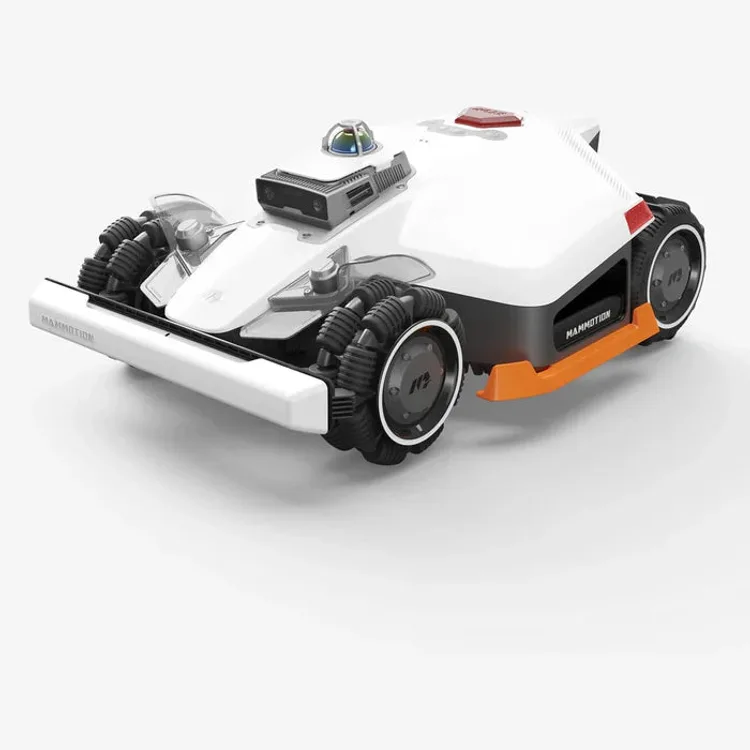
Based on owner feedback
Mammotion LUBA 3 AWD
Catalogue status · local delivery must be confirmed: Available now
- cut quality Reviewers rate it highly
- navigation Reviewers rate it highly
- setup Reviewers rate it highly
- safety Mixed results
A very capable mower for large, awkward and uneven gardens. The hardware earns praise; the bigger risk is software changes and support quality.
What people like: Owners with difficult gardens praise its traction, navigation and ability to handle complex layouts.
Common complaints: Software updates and communication from Mammotion are recurring concerns.
Mammotion AU · A$4,899.00 AUD · Recorded local offer ·
Amazon · A$4,899.00 AUD · Recorded local offer ·
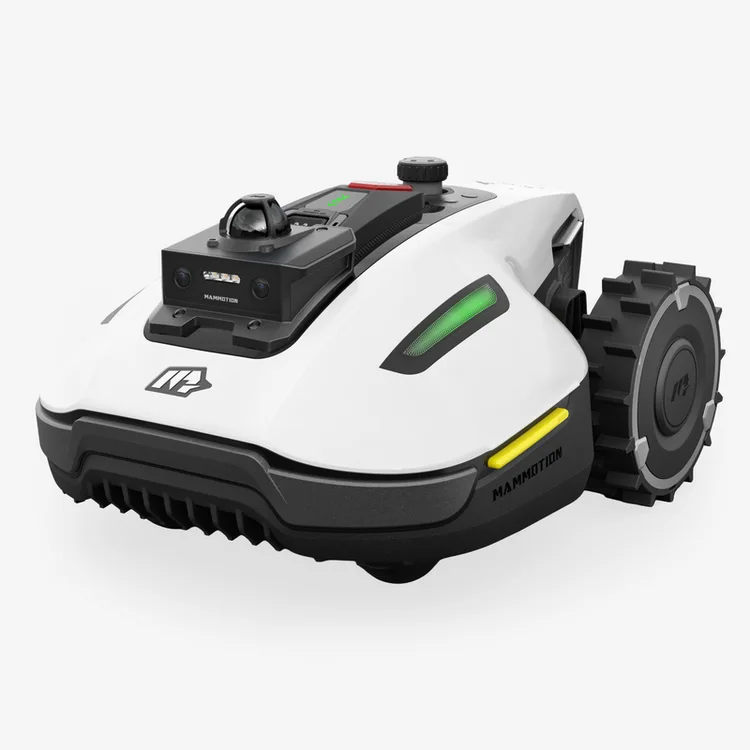
Based on owner feedback
Mammotion YUKA mini 2 1000
Catalogue status · local delivery must be confirmed: Available now
- cut quality Mixed results
- navigation Reviewers rate it highly
- setup Reviewers rate it highly
- safety Reviewers rate it highly
A capable small mower with excellent obstacle detection once it is set up properly. The main risk is software behaviour changing after updates.
What people like: Owners praise object detection, Drop & Mow, slope handling and generally good autonomous mowing.
Common complaints: Setup is not especially intuitive, and some owners report edge-cutting and behaviour problems after firmware updates.
Mammotion AU · A$2,299.00 AUD · Recorded local offer ·
Amazon · A$2,299.00 AUD · Recorded local offer ·
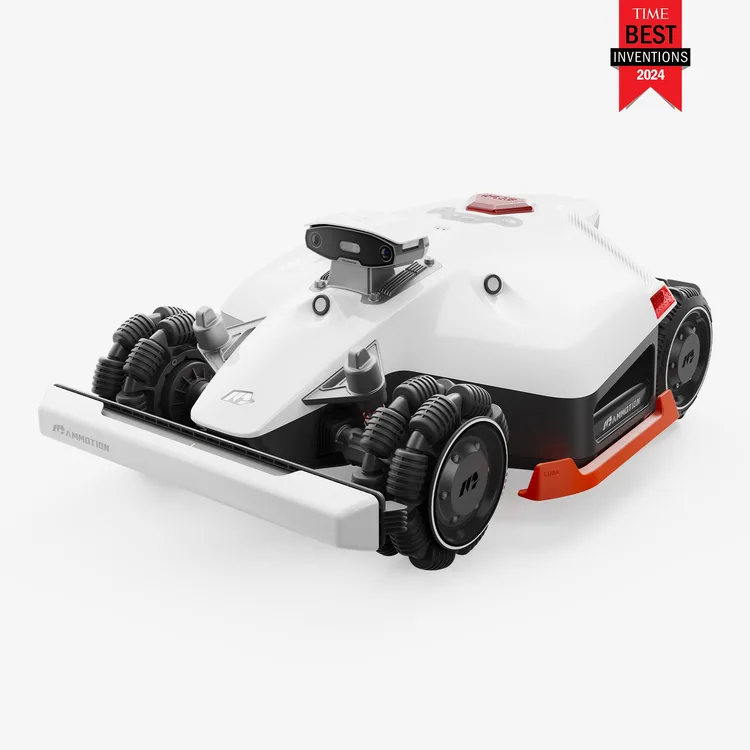
Based on owner feedback
Mammotion LUBA 2 AWD
Catalogue status · local delivery must be confirmed: Discontinued
- cut quality Reviewers rate it highly
- navigation Reviewers rate it highly
- setup Mixed results
- safety Mixed results
Robotic Lawnmowers Australia · A$4,099.00 AUD · Recorded local offer · 3000 / 3000X / 3000HX (0.75 ac)Delivery: +A$50.00 delivery
Essendon Mowers · A$4,000.00 AUD · Recorded local offer · 3000 / 3000X / 3000HX (0.75 ac)Delivery: +A$170.00 delivery
Sources (1)
Measure the difficult parts of the lawn
Measure grass that actually needs cutting, excluding buildings, beds and paving. Leave capacity headroom for weather interruptions and separate zones. Maximum advertised coverage is not a promise that the mower can finish your particular layout within a quiet daily schedule.
Draw narrow passages, steps, detached lawns and steep edges before choosing. Check slope limits at the boundary separately from the maximum working slope. Percent gradient and degrees are different units: a 50% gradient is about 27 degrees, not 50 degrees.
Match positioning to the garden
Satellite-based systems need a workable reception arrangement; tall buildings and dense trees can complicate it. Camera navigation needs recognisable surroundings, while LiDAR also depends on the environment and the product’s implementation. Read installation requirements for the exact regional variant and base station.
Ask how the mower behaves when positioning degrades, how maps are repaired and whether zones can be edited without remapping everything. Boundary wire remains worth considering when a local installer understands the site and the garden layout is unlikely to change.
Edges, obstacles and ownership
A neat centre lawn can hide an unfinished perimeter. Check cutting-disc reach, wheel clearance and whether the mower can travel on a level adjacent path. Raised borders, walls and planting beds may still require trimming by hand. Do not infer edge performance from maximum cutting width.
Budget for blades, installation accessories, battery replacement and any connectivity plan. Establish who repairs the machine locally and how it is transported. For unfamiliar brands, access to parts and a competent service contact can matter more than a small headline-price difference.
Commission it carefully
Inspect the lawn before mowing and follow the manual’s rules for children, pets and objects. Object recognition is a supplementary feature, not a substitute for a controlled mowing area. Schedule operation when the area can be checked and avoid assuming sensors detect every small animal.
Use the initial return period to test every passage and zone in ordinary conditions. Record rescues, missed strips and docking failures. Before seasonal storage, follow the manufacturer’s cleaning, battery and frost instructions rather than leaving the mower and dock exposed by default.
Robot mowers without perimeter wire
A robot mower without perimeter wire still needs a dependable way to locate itself and recognise its limits. RTK satellite positioning, cameras and LiDAR solve different parts of that problem. Start with the manufacturer’s installation survey for your garden rather than buying on the phrase “wire-free”.
Map areas beside tall buildings, under trees and through narrow passages. Ask whether the system needs an antenna, a network service or a clear reference position, and whether those items are included. A hybrid system can offer recovery options, but its actual behaviour matters more than the number of sensors.
Test boundary editing, disconnected zones and loss-of-position recovery before the return window closes. Include subscription and installation costs in the comparison. If the garden has persistently difficult positioning and rarely changes, a professionally installed wired system may be the more predictable purchase.
Robot mowers for small gardens
For a small garden, the best robot mower is the one that can get around it without help. Measure the grass, the narrowest passage and the space for the charging station before paying for a larger coverage figure.
A simple rectangle is an easier job than two small lawns joined by a narrow path. Sketch the route between each area, including gates, steps and flower beds. If the mower cannot drive between lawns, find out whether you will need to carry it and start a separate mowing session.
Leave some spare capacity rather than buying a mower whose maximum area exactly matches your lawn. That gives you more freedom over mowing hours and interruptions. It does not mean buying the largest model in the range: a wide cutting deck and large station can be awkward in a small garden.
Wire-free does not mean setup-free. Satellite reception, mobile data, Wi-Fi and space for a reference station depend on the model. Husqvarna warns that tall walls or hedges beside a narrow passage can interrupt satellite positioning. Check the installation guide for the exact mower, especially if your grass is enclosed by buildings.
Walk around the edge of the lawn before choosing. A mower can usually get closer to grass beside a level path than grass against a raised bed. Ask how much trimming will remain, and whether the station can sit where you want it without blocking a gate or garden seat.
The first week should include every passage, every patch of lawn and a return to the dock. Count how often you have to help. On a small lawn, a machine that needs regular rescuing can save less work than you expected.
Robot mowers for slopes and uneven lawns
Choose a robot mower for the steepest part of your garden and the ground at the bottom of it. The advertised slope limit is only one part of the decision.
Measure the slope in the units the maker uses. A 50% gradient means a rise of half a metre over one metre horizontally. That is about 27 degrees, not 50 degrees. Mixing the two can make a suitable mower look unsuitable, or the other way round.
Check the boundary limit separately. Turning or stopping on a slope beside a pond, path or drop is a different task from driving up the middle of a hill. Husqvarna’s installation guidance gives separate rules for slopes and boundaries. Use your exact model’s instructions when deciding where the mowing area should end.
All-wheel drive is worth considering on steep ground, but it is not a guarantee of grip on wet grass or loose soil. Look for reports from gardens like yours. Also check whether the mower can turn at the top and bottom without running into a wall or flower bed.
For a difficult garden, ask a dealer to assess it before buying. Give them the gradient, photographs of the boundaries and the route back to the station. A useful answer should explain the installation and any areas that will still need manual mowing.