
T1
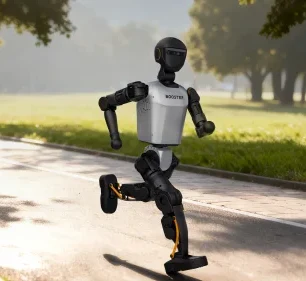
Limited evidenceRead the findings →Booster Robotics' mid-size developer humanoid, used by university teams for research and robot football. It suits labs that want a sturdy, programmable body rather than building their own. It's a platform to build on, though, not a finished robot.
Updated
Check the manufacturer’s site for current availability.
Where it sits in Booster Robotics’s range
- K1Smaller 95cm humanoid for teaching and KidSize football
- T1This model
- Booster T2Booster's newest humanoid, listed as new on its site
Feedback
What we know
What we have is news coverage of T1 in competition. NBC News watched teams of T1s play fully autonomous football in Beijing in 2025, stumbling, falling and, at least twice, being stretchered off. Interesting Engineering reports that Tsinghua University's team won RoboCup 2026 with T1. Booster Robotics supplies the specs. That points to a sturdy, programmable body, but it's too little independent testing for an overall review label.
Tested hard in robot football
NBC News reported on Beijing's first RoBoLeague in June 2025, where university teams played three-a-side matches with T1 robots and no human control. The robots waddled, stumbled and sometimes face-planted. Some got up by themselves, others needed help, and at least two were carried off on stretchers. Interesting Engineering says Tsinghua University's team then won RoboCup 2026 with T1, its second title in a row. That points to a sturdy, programmable body, not a polished product.
The teams write the brains
Booster supplies the hardware and the owners supply the intelligence. NBC News describes each university writing its own software for spotting the ball, making decisions and passing. Interesting Engineering says starting from a ready-made T1 let Tsinghua's team concentrate on software instead of mechanical engineering. Booster Robotics backs this up with programming interfaces, open-source tools and an NVIDIA computer. If nobody in your group writes robot software, T1 will do very little.
Hands change the robot
Booster Robotics sells T1 in three forms. The basic robot has 23 joints: six in each leg, four in each arm, one in the waist and two in the head. Grippers take it to 31 joints, and five-fingered hands take it to 41. Only the gripper and hand versions can do much with objects, so price the configuration your project needs, not just the base robot. Booster publishes no lifting capacity for any version.
Battery, support and what's unchecked
Booster claims about two hours of walking or four hours standing from its 10.5Ah battery, with a one-year warranty Booster Robotics. Nobody independent has reviewed T1 as a product or checked those battery figures, and football matches are short, so NBC News's coverage tells you nothing about endurance or how it holds up in a lab over months. We found no independent account of repairs or spare parts either. Ask the seller who services it in your country and how long parts take to arrive.
Specs come from Booster's T1 page and cover the basic, gripper and dexterous-hand versions.
Our take
Should you buy the T1?
Best for: Robotics classes and teams building robots for competitions. Skip it if: You expect it to do household chores by itself.
It suits university labs, competition teams and companies developing robot software who want a proven, sturdy body rather than building their own. Booster's own K1 is the smaller way in for teaching, Fourier's N1 is a similar-sized open-source platform with good documentation, and Unitree's G1 is the compact rival from a bigger maker.
T1 is Booster Robotics' mid-size humanoid, 118cm tall and about thirty kilos, with twenty-three motorised joints in its basic form and the option of grippers or five-fingered hands. It has an NVIDIA computer on board and open tools for writing your own software. It is the robot university teams used in Beijing's first fully autonomous robot football league and at RoboCup, where it has won back-to-back titles.
The coverage is all news of it in competition, including a report from NBC News. Booster's own figures give about two hours of walking or four of standing, but what it does in that time depends entirely on the code you give it. There are no built-in household skills, and it isn't sold in the UK.
Before you buy
The questions people ask about this one
What can it do on its own today?
It walks, balances and gets up after some falls, but the useful behaviour comes from software you write. NBC News saw T1s play football autonomously, running code each university developed itself. Booster Robotics provides programming interfaces and open-source tools rather than a set of household skills.
Is it safe to have around people?
Treat it as lab equipment. It weighs about 30kg, per the specifications, and NBC News saw T1s topple over in collisions during matches. We found no safety certification from Booster. Keep people clear while it's moving, especially when you're testing new code.
What does it need to run?
A charged battery, a network connection and a developer. Booster quotes about two hours of walking or four hours standing from a 10.5Ah battery, with Wi-Fi 6, Bluetooth 5.2, USB, Ethernet and an NVIDIA AGX Orin computer on board, per the specifications.
Who supports it if it breaks?
Booster gives a one-year warranty, per the specifications. Beyond that, we found no independent reports on repairs, spare parts or service outside China. If you buy through a robotics dealer, ask whether they fix it locally or ship it back to Booster.
Alternatives
Other humanoid robots to compare.
N1
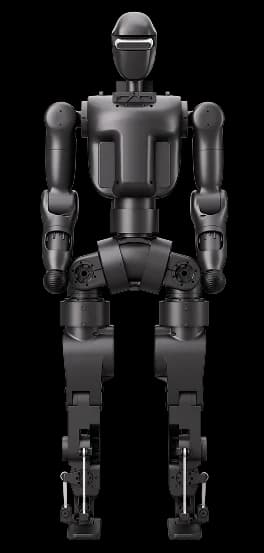
Why consider it: An open-source humanoid with unusually clear documentation on where to start developing.
The compromise: It's a developer's tool too, with no ready-made household skills.
G1
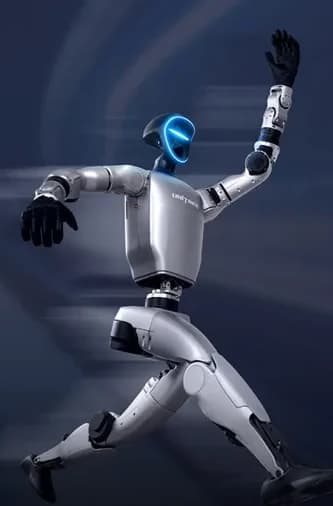
Why consider it: A compact humanoid for people who want to build robot skills themselves.
The compromise: What you get depends heavily on the configuration and programming access, and the real cost is a project, not a machine.
Oli
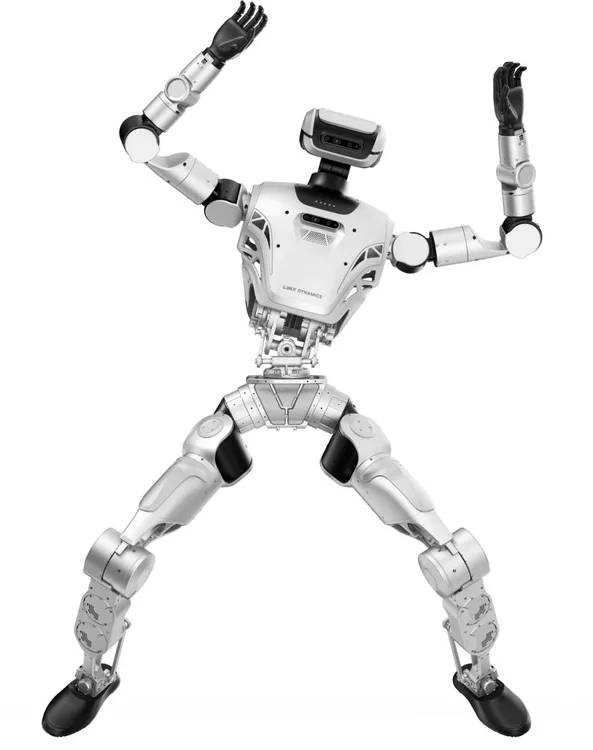
Why consider it: A full-size platform with modular hardware for movement and perception research.
The compromise: It's a lab tool rather than a set of ready-made skills, and modular hardware still needs a plan.
Specs
Full specifications
Each specification names its source. Manufacturer claims are not independent test results; unconfirmed figures are labelled.
Owner reviews
Do you own the T1?
Tell people how it’s held up: cleaning, maintenance, faults and support. Owner accounts are shown separately from independent reviews.
Sources
Where this page’s findings come from
Sources
Videos
- KhanFlicks: Humanoid Robot T1 by Booster Robotics! 🤖 | Unboxing & Review ↗
- Charbax: Booster Robotics humanoid dev kit: T1/K1 RL balance, Jetson Orin, ROS2 ↗
- Search YouTube for Booster Robotics T1 ↗Search results may include company demonstrations or similar models. Check the source and model name; a demonstration is not an independent performance test.