
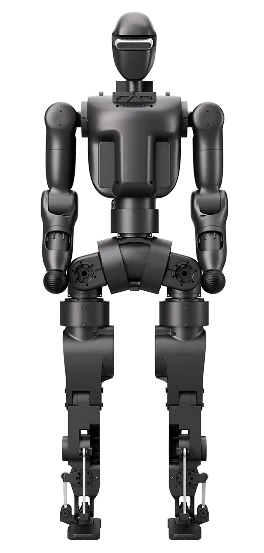
N1
Limited evidenceRead the findings →Fourier's smallest humanoid and its first open-source one, built for walking and balance. It suits developers and research groups who want to write their own movement code. It can't hold things, and Fourier hasn't published a price.
See the alternatives below, or switch market.
Where it sits in Fourier’s range
Feedback
What we know
Yicai Global covered its launch, quoting Fourier's research director on who it's for and how it might be sold, and Humanoids Daily summarised the same announcement. The specs come from Fourier's documentation Fourier and its software guide Fourier. Nothing yet shows how easy it is to build, set up or keep running, or how useful Fourier's open-source files turn out to be in practice.
Open designs for developers
Fourier released N1's full parts list, structural drawings, assembly guide, core control system and basic software, and said it would open up its whole-body motion control later Yicai Global. Its research director said the aim is to lower the barriers for smaller teams. Humanoids Daily notes that N1's success will depend on how complete those files are and how much community support Fourier builds. So if you buy one, you're partly betting on Fourier following through.
Built for moving, not handling
N1 has six joints in each leg, five in each arm, one in the waist and none in the head, which has room for a stereo camera you fit yourself Fourier. Fourier says it has measured stable running at 3.5m/s, and that N1 can climb 15 to 20 degree slopes and 20cm steps, even without cameras. There are no gripping hands, so it's a platform for walking and running research, not for picking things up.
Software you'll need to learn
You control N1 through Fourier's Python software kit, which offers high-level and developer interfaces plus examples, calibration and firmware tools Fourier. Ready-made routines cover standing, walking, running, squatting, standing on one leg and getting up after a fall. The guide is published in Chinese. The onboard computer runs Ubuntu 22.04 on an Intel Core i7-13700H with 16GB of memory Fourier.
Price and kits are unclear
Fourier's research director told Yicai Global that pricing would stay flexible, because some buyers want self-assembly kits and others want a platform ready for development. No price has been published. Fourier lists a 475Wh battery giving about two hours, a charge time of about 3.5 hours and at least 800 charge cycles Fourier. Ask exactly what's in the box before you commit.
Our take
Should you buy the N1?
Best for: Researchers studying walking and balance with designs they can modify. Skip it if: You expect it to do household chores by itself.
N1 suits a developer, university team or research group that wants a smaller humanoid to learn walking and balance control on, with open designs to modify. It's sold to them, not to households, and it can't help around the house. If you need arms that handle objects, look at Fourier's GR-2. Unitree's G1 and Booster's T1 are other small developer humanoids worth comparing.
N1 is the smallest humanoid in Fourier's range and its first open-source one, launched in April 2025. It stands 1.3m tall, weighs about 38kg and has 23 joints, none of them in the hands. Fourier published the parts list, design drawings, assembly instructions and basic software so others can build on it. It's made for walking, running, balancing and stairs, not for picking things up.
It's aimed at developers and research groups rather than households. Fourier said it might sell it as anything from a self-assembly kit to a ready-built platform, and it hasn't published a price. You control it through a Python software kit on Ubuntu Linux, so expect to program. Fourier's bigger GR-2 and GR-3 have hands for handling objects; N1 doesn't.
Before you buy
The questions people ask about this one
Can I actually buy one?
Only as a developer or organisation dealing with Fourier directly. It hasn't published a price, and its research director said N1 might come as anything from a self-assembly kit to a full development platform Yicai Global. It isn't sold as a household product.
What can it do on its own today?
According to Fourier, it walks, runs, climbs stairs and slopes, balances on one leg and gets back up after a fall Fourier. Those are movement routines in its software kit Fourier. It has no hands, so it can't fetch, carry or tidy anything.
What does it need to run?
A charged battery, good for about two hours, with about 3.5 hours to recharge the specifications. You'll also need someone comfortable with Python and Ubuntu Linux to use Fourier's software kit, whose guide is in Chinese Fourier.
Is it safe to have around people?
It's a 38kg robot that Fourier says can run at 10.8km/h, with joints producing up to 144Nm of torque the specifications. No independent safety testing has been published. Treat it like lab equipment, with space around it and someone supervising.
Alternatives
Other humanoid robots to compare.
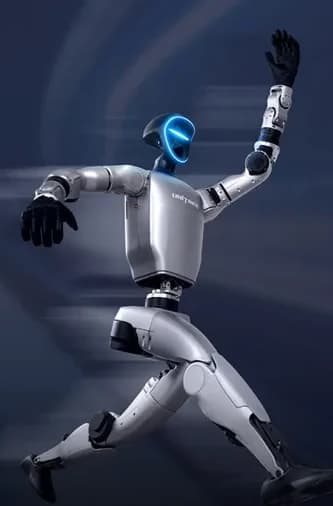
G1
Why consider it: A similar-sized developer humanoid, about 1.32m and 35kg, with a depth camera and 3D laser sensing built in.
The compromise: It's a development platform too, not a general-purpose home robot.
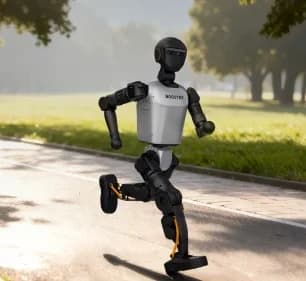
T1
Why consider it: A lighter developer humanoid with open-source tools, and optional grippers or dexterous hands.
The compromise: It's aimed at developers as well, and runs for about two hours when walking.
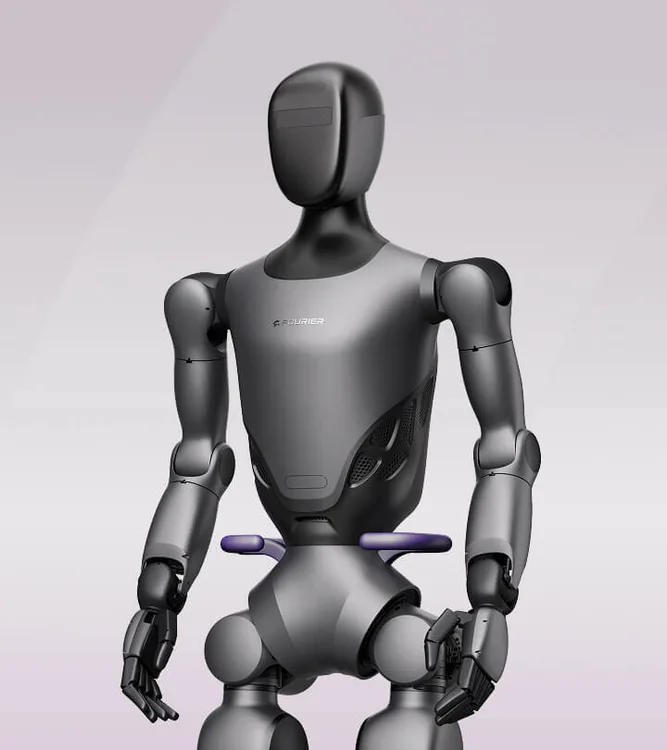
GR-2
Why consider it: Fourier's full-size platform, with hands that can have up to 12 joints each.
The compromise: It's larger, heavier and runs for only about two hours per battery.
Specs
Full specifications
Each specification names its source. Manufacturer claims are not independent test results; unconfirmed figures are labelled.
Owner reviews
Do you own the N1?
Tell people how it’s held up: cleaning, maintenance, faults and support. Owner accounts are shown separately from independent reviews.
Sources
Where this page’s findings come from
Sources
Videos
- AI News: Unitree Rival Fourier Unveils N1 Humanoid Robot With 23 DoF (NEW AI ESPORTS TECH) ↗
- Fourier: Fourier N1 | Street Dance Bot ↗
- Search YouTube for Fourier N1 ↗Search results may include company demonstrations or similar models. Check the source and model name; a demonstration is not an independent performance test.