
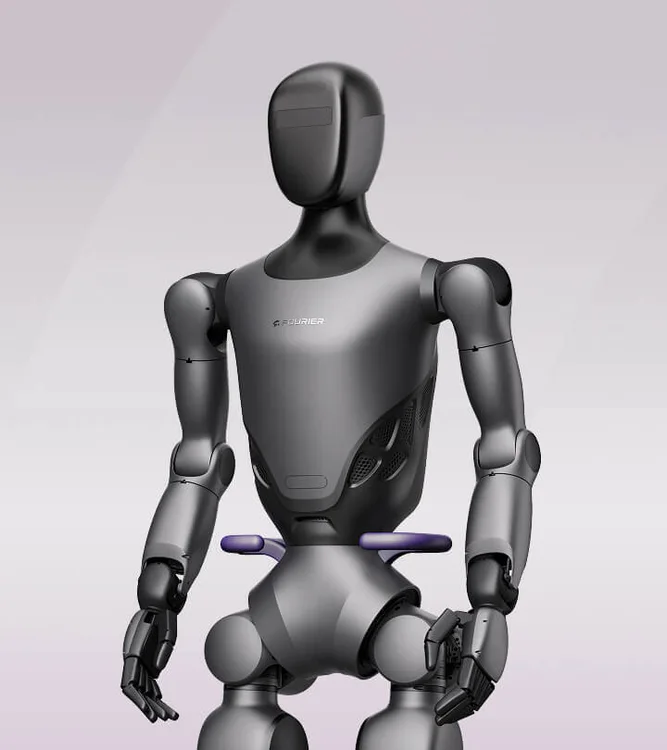
GR-2
Limited evidenceRead the findings →A full-size walking humanoid from Shanghai's Fourier, sold only to labs and businesses to program. It's for research teams, not homes, and won't do chores out of the box, so you'd write or train much of what it does yourself.
See the alternatives below, or switch market.
Where it sits in Fourier’s range
- N1Smaller open-source humanoid for developers, without hands
- Fourier GR-1First GR humanoid: 1.65m, 55kg, fixed battery
- GR-2This model
- GR-3Softer care-focused humanoid with touch sensors and a face
Feedback
What we know
The Robot Report covered the launch from Fourier's announcement, and everything else comes from Fourier's own documentation Fourier, so the figures here are Fourier's description of the hardware. That describes a programmable platform with touch-sensing hands, a swappable battery and a software kit that works with common research tools. Even the two sources' torque figures differ, which may just reflect a later revision.
A platform you program yourself
GR-2 is a starting point, not a finished helper. The Robot Report reported that Fourier's software kit works with ROS, NVIDIA Isaac Lab and MuJoCo, common tools in robotics research, with ready-made modules for vision, path planning and force control. You can teach its arms by remote control through a VR headset, by moving them by hand, or by direct commands. That suits a team with robotics skills. If you were hoping to switch it on and hand it jobs, there's nothing ready-made.
Hands with a sense of touch
Each hand has six joints as standard, and Fourier offers a 12-joint version for finer work Fourier. The Robot Report reported that the fingers carry six arrays of touch sensors that sense force and can tell the shape and material of what they hold. Each hand is only rated for about 3kg, though the specifications. It's built for delicate handling experiments, not carrying shopping or moving furniture.
Swappable battery, short sessions
Fourier lists about two hours of running time and about two hours to charge, from a battery of roughly 950Wh that weighs up to 9kg Fourier. The Robot Report reported that the battery is detachable and holds twice as much as GR-1's, so users can swap it quickly and carry on. For anything longer than a short session, budget for a spare battery.
Mismatched figures and open questions
At launch, The Robot Report quoted peak joint torque above 380Nm, while Fourier's current spec sheet lists up to 436Nm Fourier. Neither is an independent measurement, and the gap may simply be a later hardware revision. Fourier says GR-2 has so far been used experimentally for guiding visitors, research, factory work and medical rehabilitation. Nothing yet shows how well it does real work, how reliable it is over months, or what it costs to keep running. If you're buying, ask which revision you'd get and what it has actually done for other customers.
Our take
Should you buy the GR-2?
Best for: Research teams with engineers to program a full-size humanoid. Skip it if: You expect it to do household chores by itself.
GR-2 is only for a lab or company that wants a full-size humanoid to program, and it's sold to them directly rather than through shops. It won't do chores out of the box. If you want Fourier's more people-friendly robot, look at GR-3. If a smaller machine to learn on suits you better, Fourier's N1 or Unitree's G1 are closer fits.
GR-2 is the second of Fourier's full-size GR humanoids, launched in September 2024 as the upgrade to GR-1. At 1.75m and 63kg it's taller and heavier than GR-1, and its hands can have up to 12 joints each, with touch sensors in the fingers. The battery now comes out, so a team can swap in a fresh one and carry on working.
It's aimed at researchers and businesses, not households. Fourier says it's being tried out for guiding visitors, research, factory work and rehabilitation. There's no public price and no shop listing, and you'd be writing or training much of what it does yourself with Fourier's software kit. Since then Fourier has added GR-3, a softer model built for care settings, and the smaller N1.
Before you buy
The questions people ask about this one
Can I actually buy one?
Not from a shop. Fourier sells GR-2 to developers, researchers and companies, and its chief executive said at launch that those were exactly the groups Fourier wanted on board The Robot Report. There's no public price, no online ordering and nothing aimed at households.
What can it do on its own today?
Very little without your own work. Fourier describes experimental uses in visitor guidance, research, factories and rehabilitation Fourier, but GR-2 ships as a platform. You teach it tasks through its software kit, a VR headset or by guiding its arms The Robot Report.
What does it need to run?
A charged battery, which Fourier says lasts about two hours and takes about two hours to recharge the specifications. You'll also need people who can use its software kit and robotics tools such as ROS or NVIDIA Isaac Lab The Robot Report.
Is it safe to have around people?
It's a 63kg robot that walks at up to 5km/h the specifications. Fourier's documentation shows an emergency stop button on the body Fourier, but no independent safety testing has been published. Treat it as lab equipment that needs someone supervising.
Alternatives
Other humanoid robots to compare.
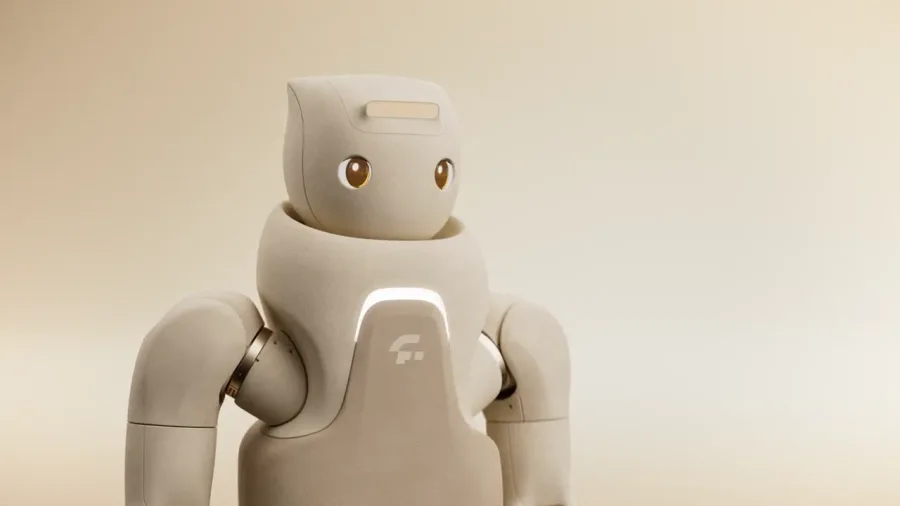
GR-3
Why consider it: Fourier's newer full-size humanoid, with a soft shell, a face and touch sensors for working around people.
The compromise: Its arms carry only about 3kg each, and it's also sold only to organisations.
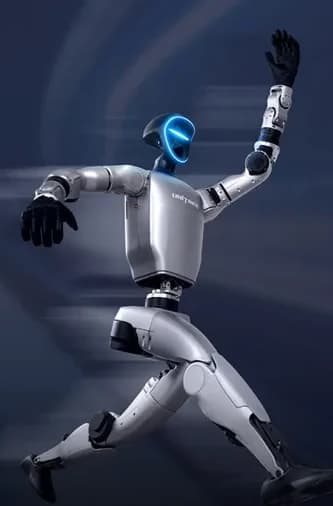
G1
Why consider it: A smaller developer humanoid, about 1.32m and 35kg, with a depth camera and 3D laser sensing.
The compromise: It's a development platform too, not a general-purpose home robot.
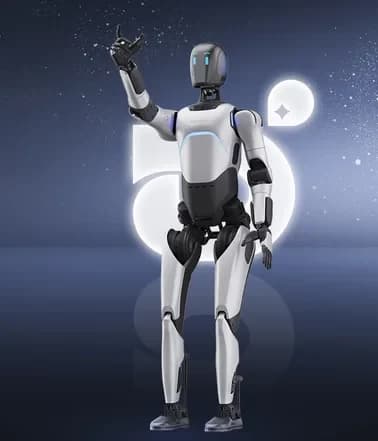
A2 Ultra
Why consider it: A full-size interactive humanoid with autonomous navigation and battery swapping.
The compromise: It's enterprise-only, and its arms are rated for only about 2kg.
Specs
Full specifications
Each specification names its source. Manufacturer claims are not independent test results; unconfirmed figures are labelled.
Owner reviews
Do you own the GR-2?
Tell people how it’s held up: cleaning, maintenance, faults and support. Owner accounts are shown separately from independent reviews.
Sources
Where this page’s findings come from
Sources
- The Robot Report: Fourier launches GR-2 humanoid, software platform ↗News
- Fourier: About GR-2 ↗Manufacturer
- Fourier: GR-2 ↗Manufacturer
Videos
- Global Update: Fourier Unveils Next Generation Humanoid Robot GR-2 ↗
- Top 3D Shop Inc.: Fourier GR 2 The Next Generation of Humanoid Robotics ↗
- Search YouTube for Fourier GR-2 ↗Search results may include company demonstrations or similar models. Check the source and model name; a demonstration is not an independent performance test.